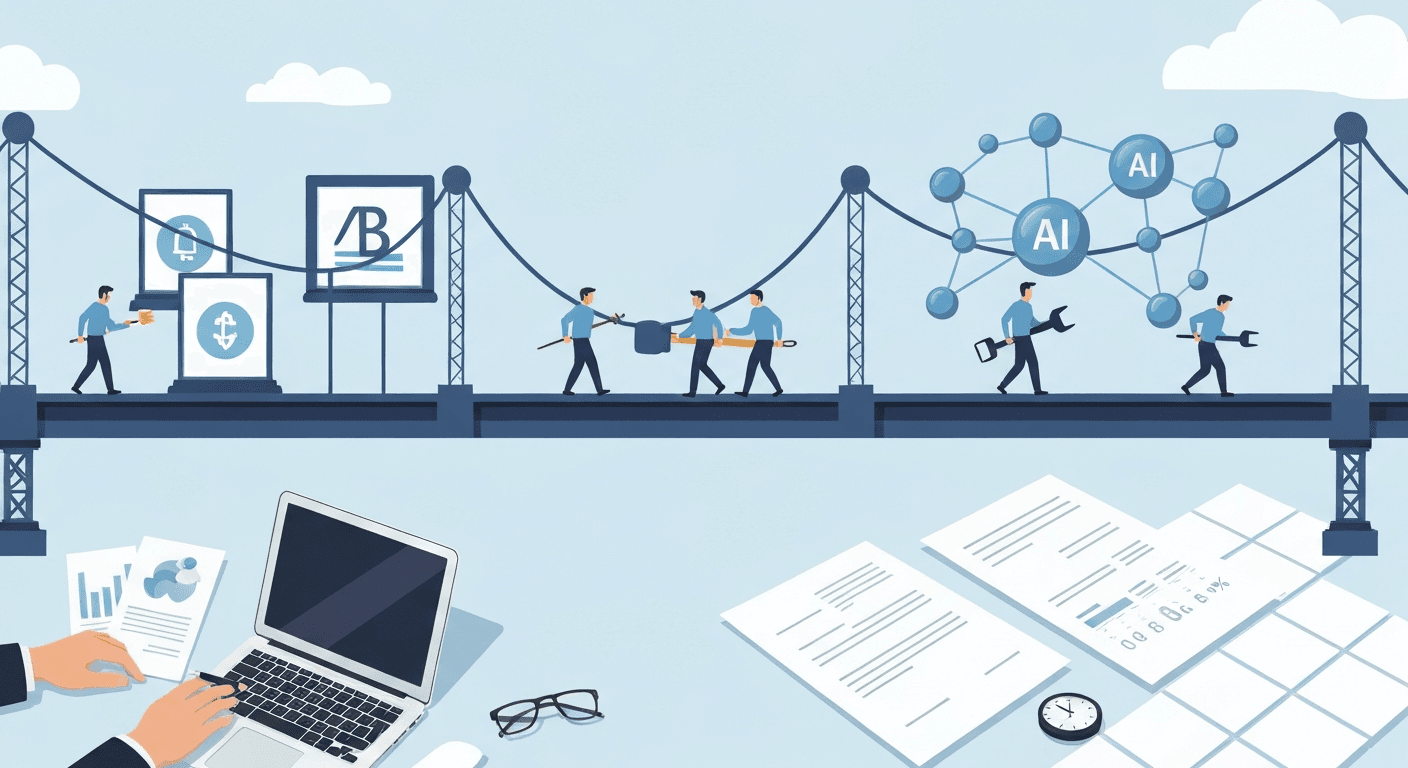
The AI Imperative: A Seismic Shift in the US Labor Market
\nArtificial intelligence (AI) has transcended its status as a mere buzzword, emerging as a foundational technology that is fundamentally transforming the US career landscape. While much of the initial discourse around AI focused on its potential to displace jobs, the reality on the ground points to a more nuanced, yet equally profound, shift: a re-evaluation of the skills employers value most. The traditional reliance on academic records and theoretical knowledge is giving way to a robust demand for practical AI literacy and problem-solving abilities, forcing workers, job seekers, HR professionals, and educational institutions to adapt at an unprecedented pace.
\nThis transformation, observed globally and now clearly echoing in the United States, means that individuals and organizations must move beyond a superficial understanding of AI. The focus is no longer solely on who can build complex AI models, but increasingly on who can effectively
The New Hiring Equation: Practicality Over Pedigree
\nEmployers in the US are increasingly moving away from hiring based strictly on theoretical knowledge. The demand for AI skills has expanded well beyond the tech industry, permeating professional services, healthcare, consulting, and even staffing firms. The number of job postings explicitly requiring AI fluency has grown sevenfold in just two years, making it the fastest-growing skill category in US job postings. This meteoric rise reflects a broader organizational need to bridge the gap between academic theory and real-world application.
\nRecruiters are placing a higher weight on a candidate's ability to demonstrate how they can actually
The impact of AI on roles is not always about job elimination; often, it's about reshaping existing positions. While AI can automate many tasks, it leaves other responsibilities untouched, allowing workers to focus on activities where AI is less capable, such as critical thinking or innovative problem-solving. This means that 50% to 55% of jobs in the US are expected to be reshaped by AI in the next two to three years, requiring new expectations for how work is done and what is produced.
\n\nKey Shifts in Employer Expectations:
\n- \n
- Applied AI Proficiency: A strong emphasis on using AI tools for automation, data analysis, and problem-solving, rather than just understanding AI concepts. \n
- Portfolio Power: Practical portfolios showcasing real-world projects, even for entry-level roles, are becoming critical. They provide concrete evidence of skills, problem-solving abilities, and initiative. \n
- Continuous Learning Mindset: Given the rapid evolution of AI, employers seek individuals who are adaptable and committed to continuous upskilling. \n
- "Human-Intensive" Skills: Paradoxically, as AI automates routine tasks, demand for traditionally senior-level 'human-intensive' skills like leadership, creativity, and face-to-face interactions is increasing, even for junior roles. \n
For Job Seekers: Navigating the AI-Driven Landscape
\nThe changing demands of the US labor market necessitate a proactive approach from job seekers. Simply having a degree from a reputable institution is no longer sufficient; demonstrating practical AI literacy is increasingly becoming a baseline requirement. Two-thirds of business leaders surveyed indicated they wouldn't hire a candidate without AI skills, and nearly three-quarters would prefer a less experienced candidate with AI skills over a more experienced one without them.
\n\nPractical Recommendations for Job Seekers:
\n- \n
- Prioritize Practical AI Literacy: Focus on understanding how AI tools work and, crucially, how to
apply them to solve real-world problems . This isn't just for technical roles; marketing professionals use AI to optimize campaigns, HR leverages AI for talent analytics, and customer service relies on AI chatbots. \n - Familiarize Yourself with Key Tools: Get hands-on experience with prominent AI applications like OpenAI's ChatGPT, Anthropic's Claude, Google's Gemini, and Microsoft's Copilot. Explore image generators for creative roles or AI agents for customer service. \n
- Build a Dynamic Project Portfolio: Your resume tells what you claim to know; a portfolio proves what you can actually do. Curate projects that highlight your ability to solve real-world problems, the technologies you've used, and measurable outcomes. Ensure it's visually appealing, easy to navigate, and mobile-friendly. Regularly update it to show your commitment to continuous learning. \n
- Seek AI-Specific Certifications and Internships: Short-form certificates and professional programs focused on AI can signal credibility and readiness to employers, especially for those looking to pivot careers or gain internal promotions. Internships provide invaluable practical experience and exposure to emerging technologies. \n
- Emphasize "Soft" AI Skills: Beyond technical prowess, highlight your ability to critically evaluate AI outputs, manage AI-assisted workflows, and understand the ethical implications of AI. These conceptual skills are crucial for deploying AI thoughtfully. \n
- Showcase Your AI Fluency in Applications: Incorporate AI skills into your resume's skills section, mention successful uses in past job descriptions, and be prepared to discuss how you've experimented with AI to improve productivity in interviews. \n
Job Seeker's Checklist for the AI Era:
\n- \n
- ✓ Identify AI tools relevant to your target industry/role. \n
- ✓ Complete online courses or micro-credentials in AI. \n
- ✓ Develop 2-3 practical AI projects for your portfolio. \n
- ✓ Quantify the impact of AI tools on your work (e.g., increased efficiency, improved accuracy). \n
- ✓ Network with professionals already leveraging AI in their roles. \n
- ✓ Update your resume and LinkedIn to reflect AI competencies. \n
- ✓ Practice discussing your AI experiences in mock interviews. \n
For Employers and HR Professionals: Re-imagining Talent Acquisition and Development
\nThe imperative for employers and HR professionals is clear: adapting to the AI-driven labor market is no longer optional but a strategic necessity. The skills employers are looking for are changing 66% faster in AI-exposed jobs, a velocity that traditional learning and development approaches struggle to match. More than 90% of HR professionals are now involved in AI implementation at their organizations, seeing it as a key driver of business value.
\n\nAdapting Recruitment Processes:
\n- \n
- Skill-Based Hiring: Shift from solely credential-based hiring to a more skill-centric approach. Utilize AI-powered tools for resume screening and candidate matching, which can reduce bias and improve efficiency, allowing recruiters to focus on strategic tasks and relationship building. \n
- Redefine Job Descriptions: Clearly articulate the AI literacy and practical application skills required for roles, both technical and non-technical. Employers are increasingly looking for "AI-capable," "AI-adoptive," or "AI-transformative" candidates. \n
- Leverage AI in Recruiting: AI streamlines administrative tasks like sourcing, screening, and scheduling, freeing up recruiters for higher-value activities. AI can also enhance the candidate experience by providing instant responses and personalized communication. \n
- Interview for AI Acumen: Develop interview questions that gauge a candidate's openness to AI, their experiences using AI tools, and their ability to think critically about AI outputs. \n
Investing in Workforce Development:
\n- \n
- Upskilling and Reskilling Initiatives: Proactively invest in training programs that equip current employees with practical AI skills. Nearly six in ten workers will require training before 2030 due to AI adoption. However, only about 40% of organizations provide immersive, hands-on AI proficiency training. \n
- AI-Powered Corporate Training: Utilize AI to design, deliver, and personalize employee learning experiences. Adaptive learning platforms can tailor training paths based on an employee's role, skill gaps, and learning pace, making training more effective and engaging. \n
- Foster an AI-First Culture: Leaders must model AI adoption and create a psychologically safe environment for experimentation and continuous learning. This involves recognizing that AI will reshape more jobs than it replaces, often by augmenting existing roles. \n
- Strategic Partnerships: Collaborate with educational institutions to develop curricula that meet industry needs. \n
HR Professional's Checklist for the AI Era:
\n- \n
- ✓ Audit current job descriptions for AI skill requirements. \n
- ✓ Implement AI-powered tools for initial candidate screening to improve efficiency and reduce bias. \n
- ✓ Develop structured interview questions to assess AI literacy. \n
- ✓ Launch or expand internal AI upskilling programs. \n
- ✓ Explore AI-powered learning platforms for personalized employee development. \n
- ✓ Collaborate with academic institutions to shape future talent pipelines. \n
- ✓ Communicate AI's role in augmenting, rather than replacing, roles to alleviate employee anxieties. \n
The Role of Education: Keeping Pace with Rapid Technological Change
\nEducational institutions in the US face a critical challenge: the speed of technological change often outpaces traditional university curriculum approval processes. The World Economic Forum suggests that a significant portion of global workforce skills will undergo transformation by 2030 due to AI adoption.
\nForward-thinking universities are already embedding AI concepts into existing programs, creating hybrid learning experiences, and offering short-term certificate programs to quickly impart AI skills. Institutions like the University of Florida have been proactive in integrating AI across all undergraduate majors and graduate programs, while others are implementing AI fluency as a general education requirement. More than half of higher education leaders now consider AI a strategic priority.
\n\nKey Actions for Educational Institutions:
\n- \n
- Curriculum Reform: Rapidly update syllabi to include AI as a core competency across various disciplines, not just computer science. This includes interdisciplinary programs where AI is embedded across engineering streams, business, arts, and humanities. \n
- Emphasize Practical Application: Move beyond theoretical instruction to provide students with hands-on projects, access to industry tools, and opportunities for practical application of AI. \n
- Industry Partnerships: Forge stronger ties with technology firms and employers to ensure curricula are aligned with current and future industry needs. \n
- Faculty Development: Invest in training faculty to integrate AI effectively into their teaching and research. \n
- Promote AI Ethics: Equip students to use AI ethically and thoughtfully, addressing concerns around data privacy, algorithmic bias, and societal impact. \n
A Continuous Evolution: The Future is Agile and AI-Fluent
\nThe integration of AI into the US labor market is not a one-time event but an ongoing evolution. The divide between institutions and individuals who adapt to these shifts and those who remain tethered to outdated models will only widen. The next few years will undoubtedly see a clearer separation in career success between graduates and professionals who embrace critical new-age AI skills and those who do not. The emphasis on practical AI literacy, demonstrated through portfolios and real-world application, is paramount. For job seekers, it means a strategic re-evaluation of skill development and presentation. For employers, it requires a fundamental rethinking of talent acquisition, retention, and continuous learning. And for educators, it demands agility in curriculum development and a deep engagement with industry to ensure students are truly future-ready.
\nAs the US workforce continues its journey into the AI era, agility, adaptability, and a commitment to lifelong learning will be the defining characteristics of success. The conversation has moved beyond whether AI will impact jobs to how individuals and organizations will leverage AI to create new value, enhance human capabilities, and navigate a rapidly changing world.